How to Order on Different European Amazon Stores
Unlock the Best Deals by Shopping Across European Amazon Stores
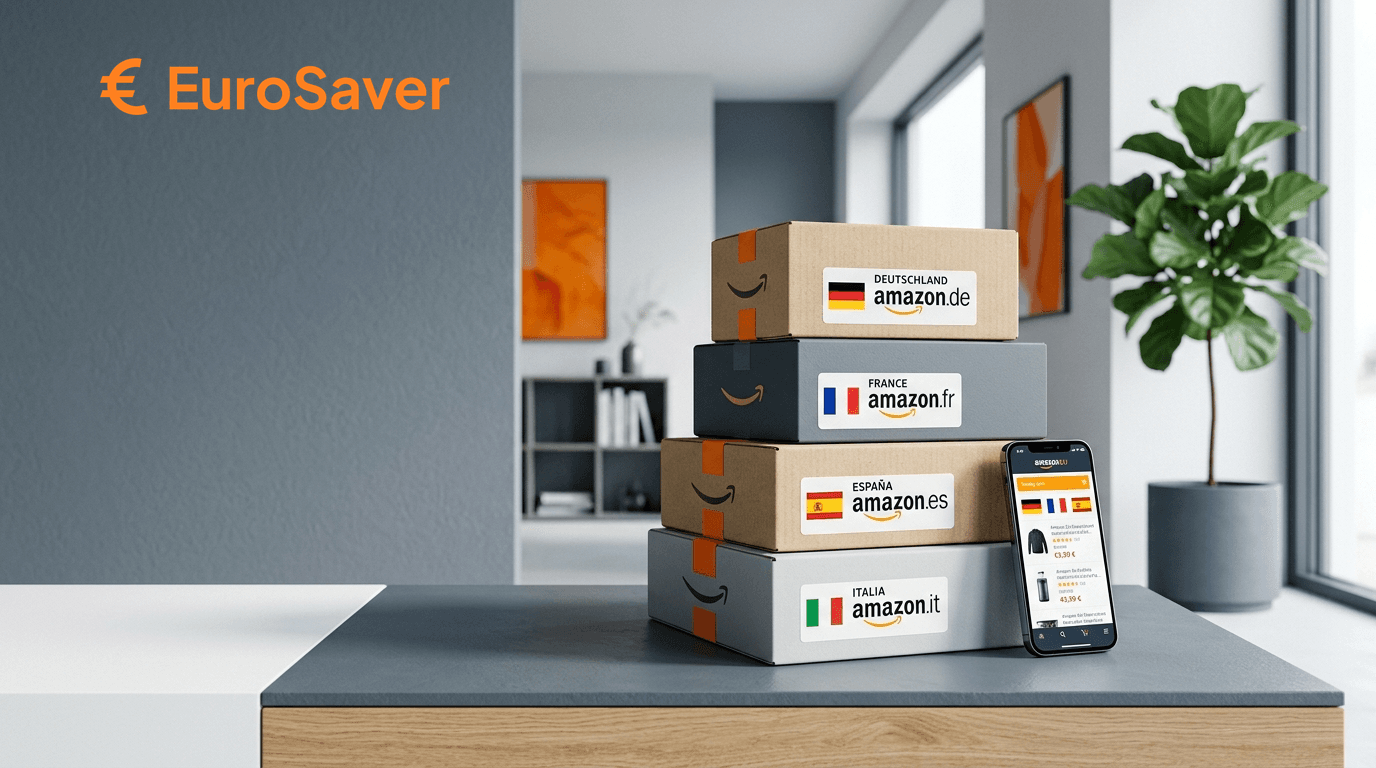
Did you know that Amazon isn't just one big, global marketplace? It's actually a collection of different stores across Europe, each with its own unique offerings. If you've been sticking to your local Amazon site, you might be missing out on some serious deals. Let's dive into the world of cross-border Amazon shopping and discover how Eurosaver can be your secret weapon for finding the best bargains.
🤔 Why Bother with Other European Amazon Stores?
You might be thinking, "My local Amazon store has everything I need. Why complicate things?" Well, let me tell you, there's a whole world of benefits waiting for you:
💰 Better Prices (Who Doesn't Love Those?)
Here's a little-known secret: prices can vary wildly between different European Amazon stores. That gadget you've been eyeing on Amazon.fr might be a steal on Amazon.it. It's like a treasure hunt, but instead of gold, you're finding sweet, sweet discounts.
🎁 More Stuff to Choose From
Ever tried to buy something only to find it's not available in your country? Frustrating, right? Well, other European Amazon stores might have exactly what you're looking for. It's especially handy for those unique or niche items that might be more popular in other countries.
🚚 Faster (or Cheaper) Shipping
Living near a border? You might find that ordering from a neighboring country's Amazon store gets your goodies to you faster or cheaper. It's like having a friend across the border who can hook you up with better deals!
🗺️ Your Guide to Shopping Across European Amazon Stores
Ready to embark on your cross-border shopping adventure? Here's your roadmap:
1. 🌐 Find the Right URL
Each European Amazon store has its own web address. Here are the big players:
- 🇩🇪 Germany: Amazon.de
- 🇬🇧 UK: Amazon.co.uk
- 🇮🇪 Ireland: Amazon.ie
- 🇫🇷 France: Amazon.fr
- 🇮🇹 Italy: Amazon.it
- 🇪🇸 Spain: Amazon.es
- 🇳🇱 Netherlands: Amazon.nl
- 🇸🇪 Sweden: Amazon.se
- 🇧🇪 Belgium: Amazon.com.be
- 🇵🇱 Poland: Amazon.pl
2. 🗣️ Speak the Language (Or Let Amazon Do It for You)
Don't speak Italian? No worries! Look for the language options, usually hanging out in the top-right corner. Switch to your preferred language and shop away!
3. 🧮 Do the Math (Or Let Eurosaver Do It for You)
Once you've found your item, check the price and shipping costs. Remember, VAT rates can be sneaky and vary between countries. Also, keep an eye on those shipping options - some items might get stage fright when crossing borders.
4. 💳 Money Matters
Different stores might use different currencies. Check those exchange rates and any fees your bank might charge for playing with foreign money. Some stores let you pay in your local currency, but beware - their conversion rates might not always be the friendliest.
5. 🔑 Log In or Sign Up
Good news! Your Amazon account is like a VIP pass - it usually works across all European stores. You might need to update your shipping address and payment details for each country, though.
🦸 Meet Your Shopping Superhero: Eurosaver
Now, I know what you're thinking. "This sounds great, but also like a lot of work." That's where Eurosaver swoops in to save the day (and your wallet)!
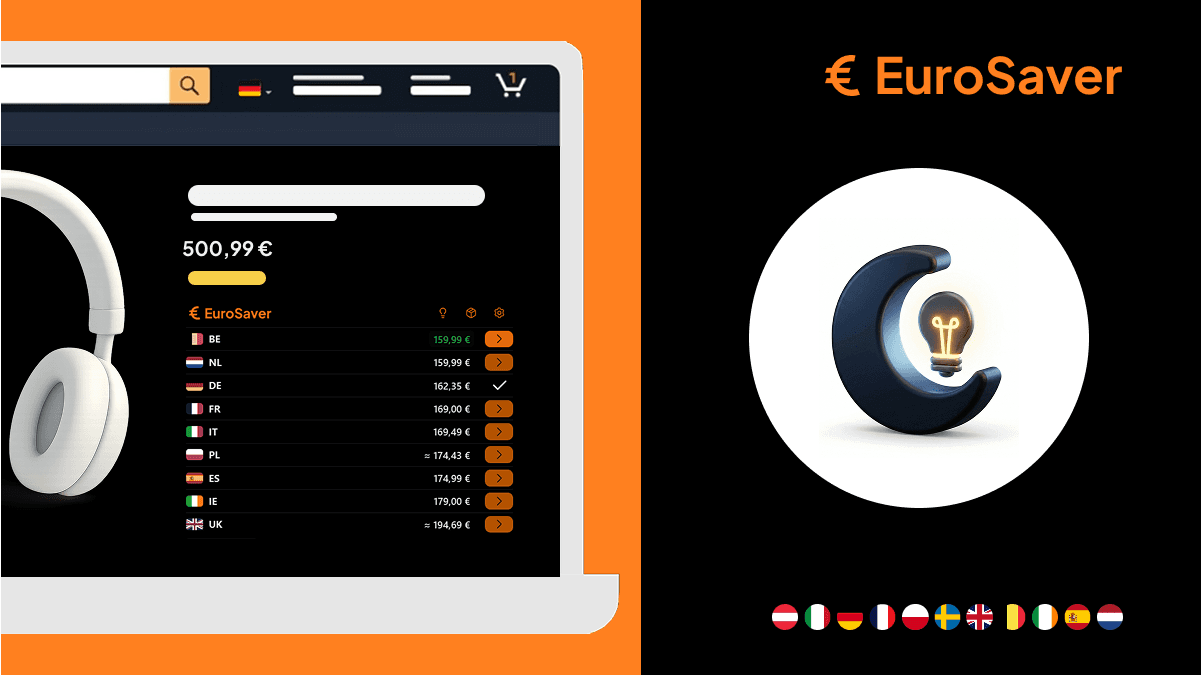
Eurosaver is like having a team of bargain-hunting ninjas at your fingertips. Here's how it makes your life easier:
🔍 Price Comparison Across Stores
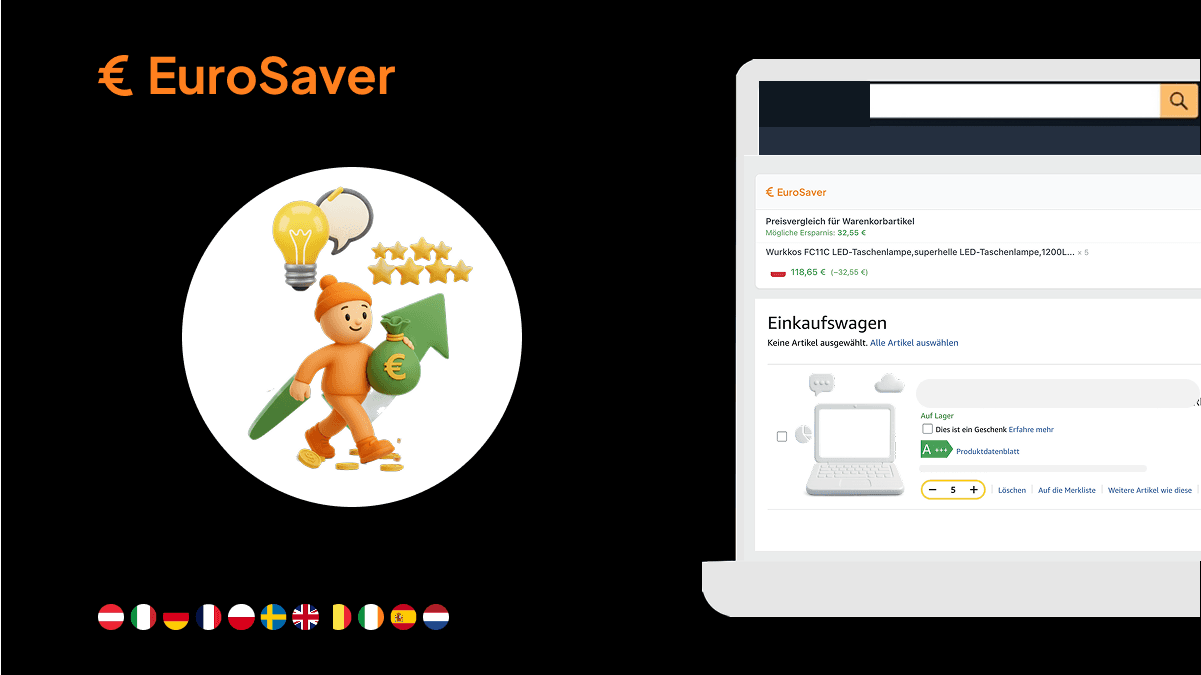
No more tab-juggling or manual price checking. Eurosaver does the legwork for you, comparing prices across European Amazon stores faster than you can say "bargain."
💱 Currency Conversion Magic
Forget about pulling out your calculator or Googling exchange rates. Eurosaver converts everything to your local currency, so you know exactly what you're spending.
📊 Price Tracking and Alerts
Want to wait for a better deal? Eurosaver can keep an eye on prices for you and give you a heads up when they drop. It's like having a personal shopping assistant!
📦 Shipping Cost Calculator
Shipping costs can make or break a deal. Eurosaver factors these in, so you're not caught off guard by surprise fees at checkout.
🎉 Ready to Become a European Amazon Pro?
Shopping across European Amazon stores is like unlocking a whole new level in the game of online shopping. With a bit of know-how and the power of Eurosaver by your side, you'll be scoring amazing deals in no time.
So, the next time you're about to hit that "Buy Now" button, take a moment to check out other European Amazon stores. With Eurosaver, it's easier than ever to shop smarter, save money, and maybe even get your hands on that hard-to-find item you've been dreaming of.