The Amazon filter «Dispatched from and sold by Amazon»: how to find those offers
Why the seller decides on returns and statutory rights, and how to filter deliberately
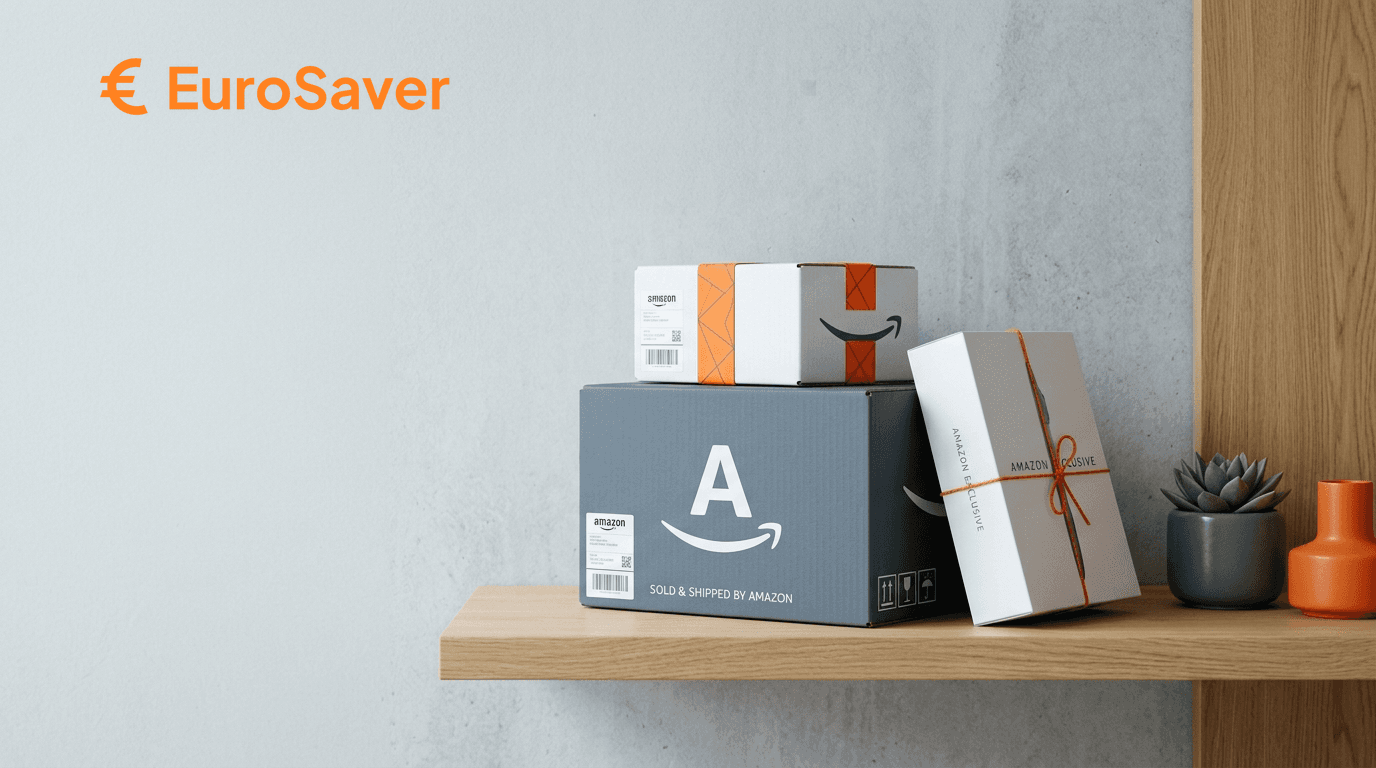
On every Amazon product page small print states who sells and who ships. Most people read past it. On a domestic order it rarely matters; abroad it decides who you turn to when something goes wrong.
Amazon at some point removed the search filter for its own offers. This text explains why the distinction still matters and how to search for it deliberately.
The three offer types
Behind every article sits one of three constellations.
Dispatched from and sold by Amazon. Amazon is seller and logistician. The purchase contract forms with Amazon EU S.à r.l., goods rest in the Amazon warehouse; returns and complaints follow the standard process.
Sold by third parties, dispatched by Amazon (FBA). A seller uses Amazon's logistics but remains your contracting party. Delivery and Prime work as usual; your statutory rights run however against this seller.
Sold and dispatched by third parties (FBM). The seller ships from their own warehouse and sets shipping rates and return conditions themselves. Here lie the biggest differences — for better and worse.
Why the difference matters practically
On returns. When Amazon sells itself you start the return through the Returns Centre and normally receive a ready label. With a marketplace seller the seller sets the conditions.
On statutory rights. UK purchases fall under the Consumer Rights Act 2015 against your seller. Whether that is a corporation with a standardised process or a small trader in another country makes the difference in a dispute.
On shipping abroad. Sellers dispatching themselves calculate freely. An Italian provider can deliver moderately domestically and charge 19 € for a parcel to the UK. Two offers with identical product price then diverge considerably in total, see Amazon price comparison including shipping costs.
On product provenance. Amazon sources directly from manufacturers and authorised suppliers. With third parties the chain is less transparent — particularly relevant for electronics and smart home where imports from other world regions refuse to work with European services.
On scarce goods. Around releases and promo days the marketplace fills with sellers clearly above list price. In a foreign store this is harder to notice because you lack the reference.
The point where many go wrong
The distinction is no statement about third-party quality. Many marketplace sellers work reliably; some are the manufacturer themselves and offer the best price.
It is about predictability. With «Dispatched from and sold by Amazon» you know beforehand what happens if something does not fit. For everything else you have to check. How much that is worth to you depends on the value: at £15 it hardly matters; for a £400 device from abroad it does.
Where the indication sits
On the product page to the right of or below the buying area: «sold by» and «dispatched by». On mobile you usually need to scroll a bit.
If an article has multiple sellers the link «Other sellers on Amazon» leads to a list where price, postage and seller stand side by side. At one glance you see what Amazon's own offer costs and what the cheapest third party asks.
How to filter deliberately
In regular Amazon search there is no longer an option. Three routes remain.
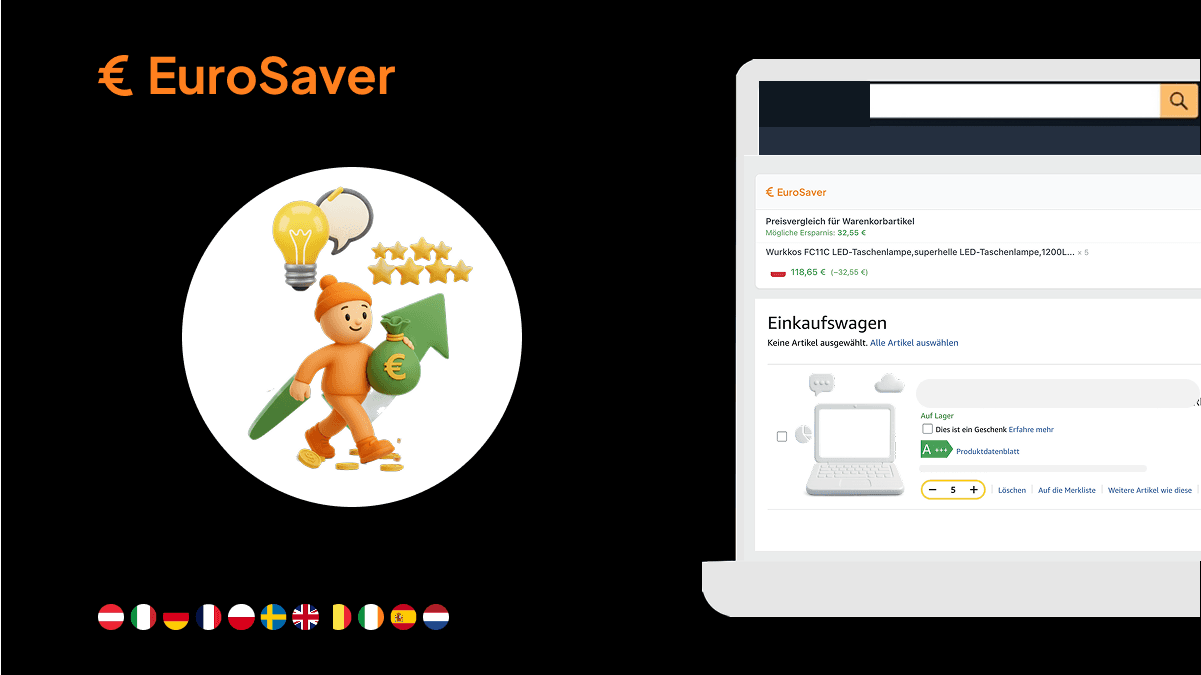
Via the extension. EuroSaver inserts the filter directly into Amazon's search results. One click and the list shows only offers sold and dispatched by Amazon. That is the fastest route and works in all supported stores.
Via the offer list. For a single article «Other sellers on Amazon» leads to the overview where you see the seller directly.
Via the Prime filter as approximation. It shows everything coming from the Amazon warehouse — including FBA offers from third parties. Usable as rough preselection, insufficient for the question of contracting party.
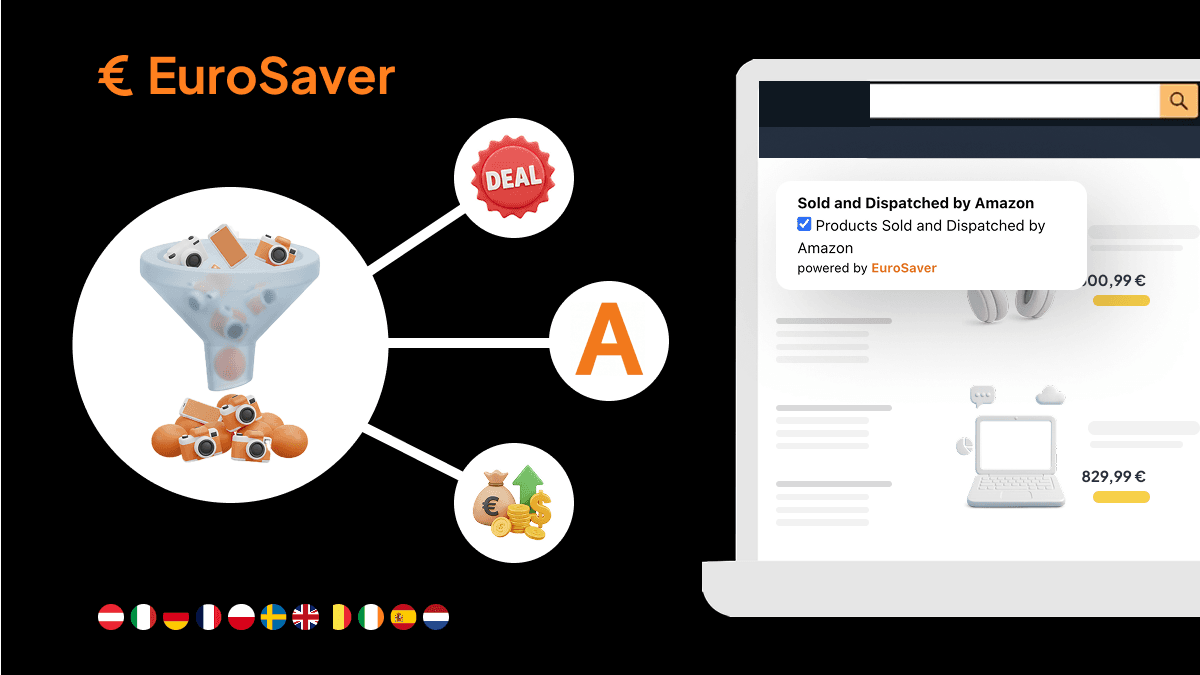
Filter and country comparison together
That combination becomes interesting. Buying abroad means wanting both: the lowest price and a predictable seller.
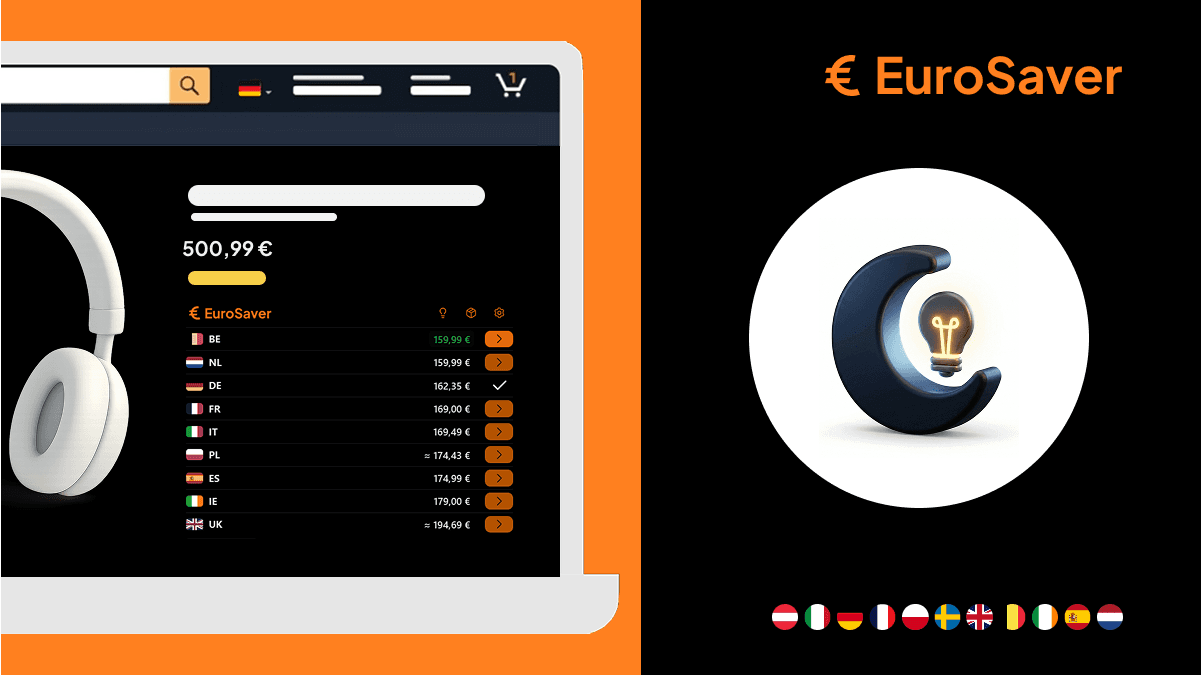
EuroSaver shows on the product page the prices of your activated stores, converted currency and estimated shipping included. The filter in the search results ensures you do not land with a seller whose return conditions you would first have to translate.
How the country comparison works stands in Amazon EU price comparison. First steps with the extension explained by the welcome page.
When a third-party seller is still the right choice
Not every purchase needs to run through Amazon.
A marketplace offer makes sense when the manufacturer sells itself, when Amazon does not carry the article at all, when the price difference is clear and the value low, or when the seller holds many reviews with good average.
Restraint applies to expensive electronics from abroad, to articles you will probably send back, and to offers sitting suspiciously below all others.
FAQ
Why did Amazon remove the filter?
Amazon removed it from regular search without official justification. Via the offer list of a single article the information stays visible.
Is «Prime» the same as «Dispatched from and sold by Amazon»?
No. Prime refers to delivery from the Amazon warehouse and also applies to third parties using FBA. About the seller and thereby your contracting party the Prime logo says nothing.
Are products from third parties worse?
Not per se. The difference lies in the predictability of costs, returns and complaints, not automatically in product quality.
Do statutory rights apply also to marketplace purchases?
Yes: under the Consumer Rights Act 2015 against the respective seller, not against Amazon. With a trader abroad enforcement can be more laborious.
Does the filter work also in foreign Amazon stores?
Yes, in every store the extension supports. Precisely there it helps because you lack the sense of which local sellers are established.