Why Amazon prices differ across European stores
A look behind the scenes of Amazon pricing in Europe

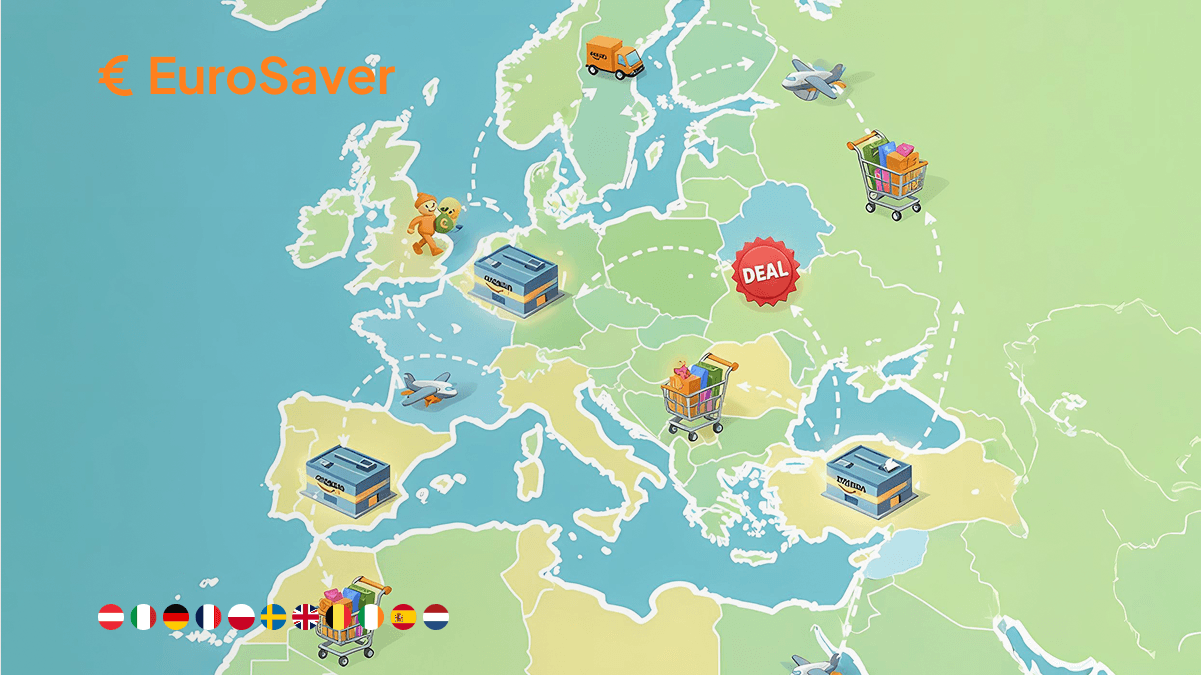
The same Amazon product often carries different prices on amazon.co.uk, amazon.de or amazon.es, because Amazon adjusts its pricing continuously to local purchasing power, regional competition and stock levels. Separate promotional calendars and country-specific marketplace sellers add to that. In practice: across many categories there is a double-digit gap between one store and its neighbour.
Anyone ordering online regularly notices quickly that their home store does not automatically have the best offer. Sometimes a glance towards Germany or Spain is enough to find the identical item noticeably cheaper.
That is no accident. Behind the prices sits an algorithmic pricing strategy that tracks the market conditions of every single country.
How local demand steers prices
Local demand is the strongest driver of price differences between Amazon's European marketplaces. The algorithms continuously adapt prices to customers' buying behaviour in each region. If an item sells brilliantly in one country, there is no reason to discount it. The same product can generate little interest in another.
Kitchen appliances are the textbook case. Bean-to-cup coffee machines stand in many kitchens in some markets and sell steadily; elsewhere consumers prefer other brewing methods. To keep stock moving anyway, Amazon lowers prices where demand lags. For you that means an offer that can stay attractive even with shipping on top.
Purchasing power plays a role too. Economic conditions in Spain or Portugal differ from those in France or Germany, and in certain product segments Amazon calculates with adjusted margins to remain competitive locally.
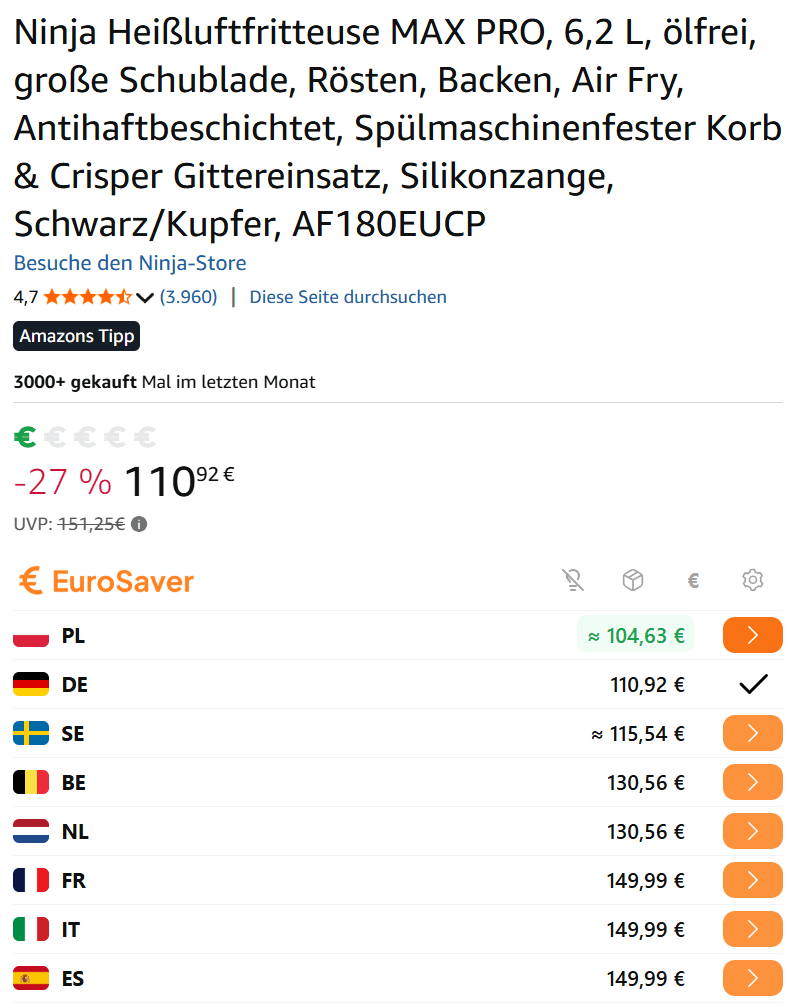
Why local competition pushes prices down
On the Amazon marketplace, countless third-party sellers compete with each other and with Amazon itself. How intense that competition is varies considerably from country to country. In Germany and France there are other established online retailers and chains against which Amazon fights daily. As soon as a local competitor lowers its price, the algorithm on the corresponding country page follows within minutes.
A second effect is warehouse pressure. When a marketplace seller stores goods in a Spanish Amazon warehouse (Fulfillment by Amazon) and sales fall behind plan, storage fees climb. To avoid those costs, sellers cut prices sharply and clear stock fast. Undercutting battles like these emerge on amazon.es, benefiting shoppers across Europe who look at the right moment.
Separate promotional calendars and regional discounts
Every European store plans its marketing independently, with its own budget and campaign windows. A flash deal on amazon.de has nothing to do with the ones on amazon.es. A product can be heavily discounted for a few hours in Germany while it stays at standard price elsewhere.
Alongside global events such as Prime Day there are regional occasions that feed through into prices. The French soldes are regulated by law and fall on fixed dates, visible on amazon.fr too. In Spain, Reyes on 6 January stretches the gift season beyond Christmas, and price curves follow that rhythm.
How shipping costs and tax rates change the final price
The price on a foreign product page is rarely what you end up paying. Two items arrive at checkout: the destination country's VAT treatment and cross-border shipping.
Within the EU the destination principle applies. Delivered to a French address, a Spanish price drops from 21 percent VAT to 20 percent at the last step; delivered from Italy (22 percent) it drops further. The mechanics matter less for UK buyers, though: goods ordered from EU stores leave as exports, so no EU checkout adjustment applies. Instead, UK import charges arrive after purchase:
- Import VAT of 20 percent on the goods value plus postage.
- Courier clearance fees, typically £4 to £8.
- Above £135, customs duties depending on the product category.
Shipping comes on top of all this. Your Prime flat rate from amazon.co.uk normally does not cover orders from other stores; Amazon charges a delivery fee, usually between £4 and £9. The calculation is simple: buying abroad pays off when the saving on the product beats shipping plus import charges. With UK rates stacked on nearly every EU order, the real margin is narrower than the product page suggests.
In which categories the differences are largest
Fluctuations exist across the whole range, but four product groups stand out.
In electronics and accessories prices move daily. Headphones, Bluetooth speakers, cables and storage media count among the most volatile items. A premium pair of headphones can cost £299 in one store and be on offer the same day for £239 in another.
Household appliances such as robot vacuums, coffee machines and smart thermostats often sit tens of pounds apart, because launches and promotions are steered per country.
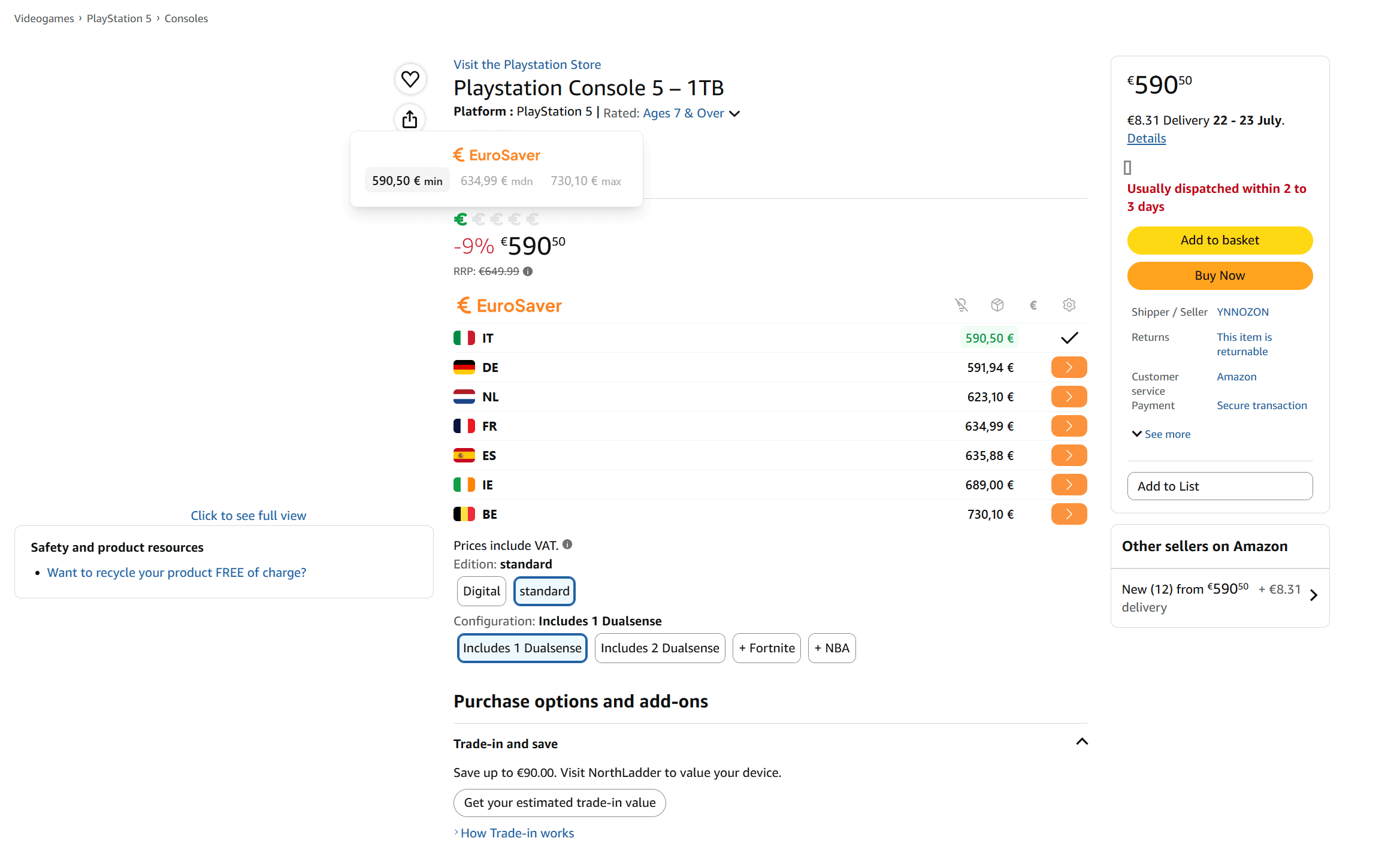
Video games and console accessories are regularly cheaper in southern Europe. Since most titles ship multilingual, the disc version usually contains English.
In beauty and personal care, France, Italy and Germany carry different bundles and lower base prices, for example on shavers, epilators and electric toothbrushes.
How EuroSaver shortcuts the European comparison
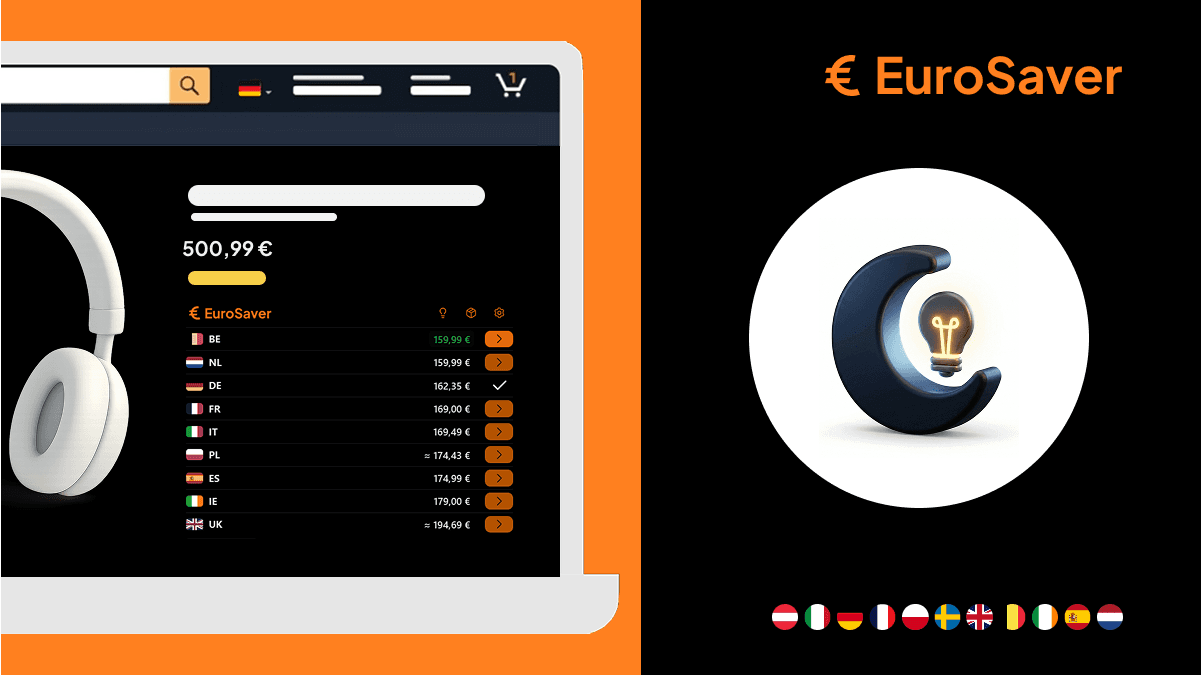
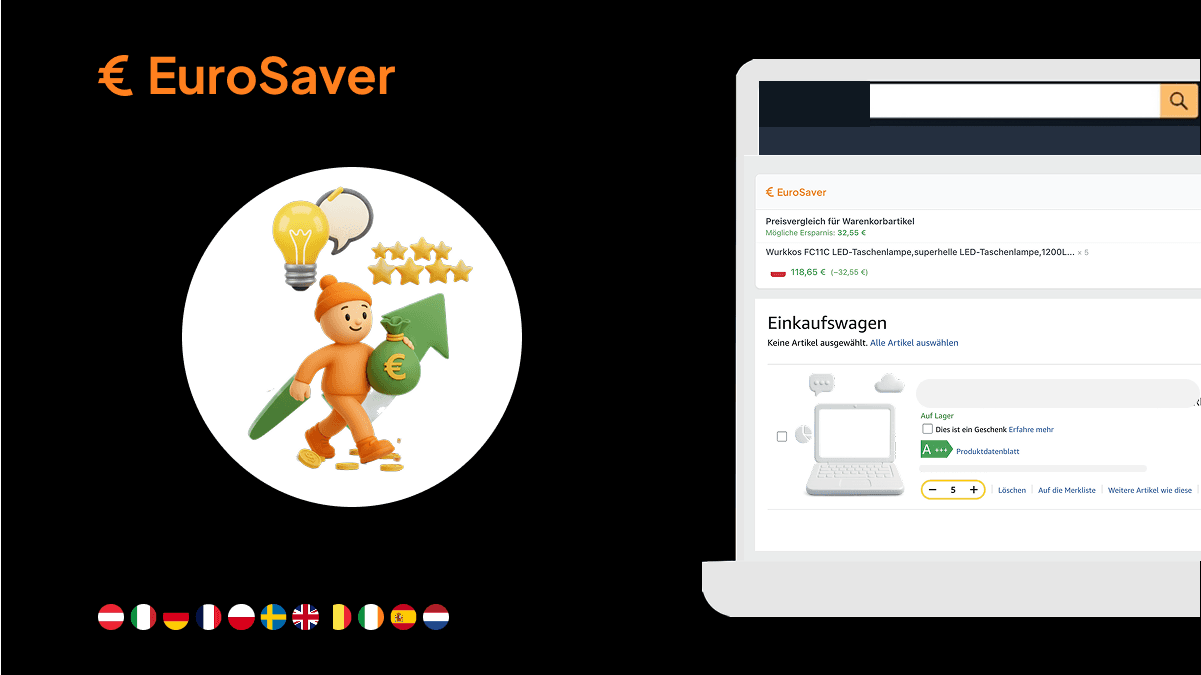
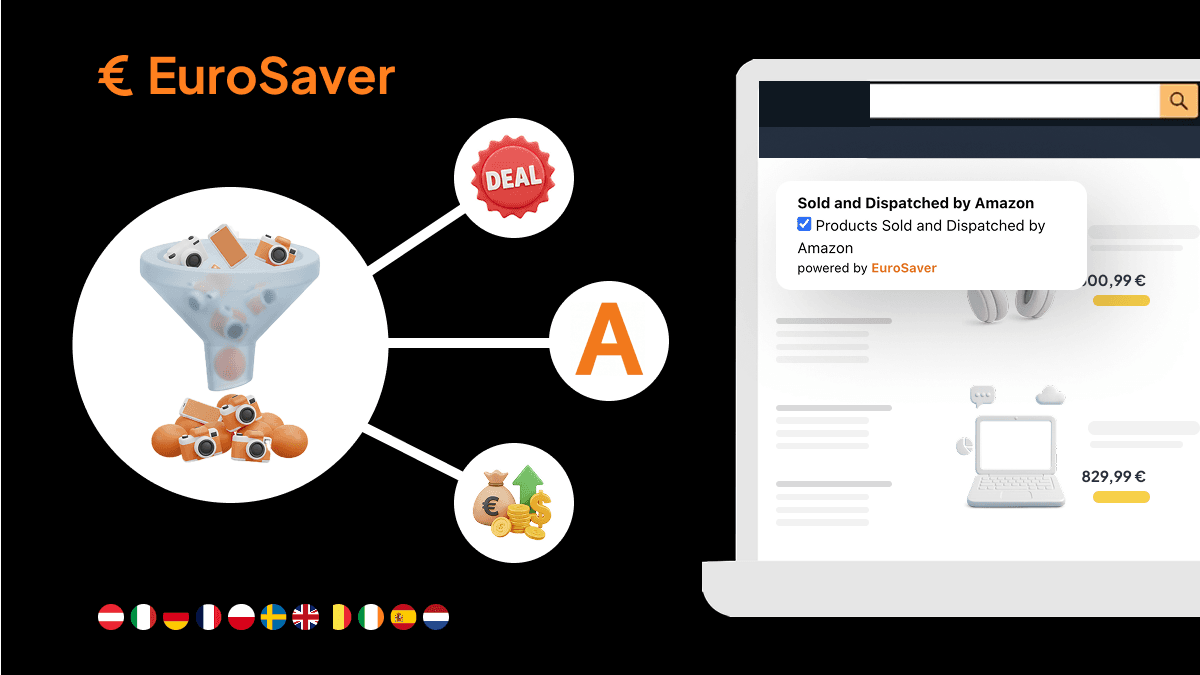
Going through five country pages by hand takes time: copy the ASIN, switch stores, search, compare — for each product individually. That is where EuroSaver steps in. The free tool compares Amazon's European marketplaces automatically and presents the results clearly. What that looks like you can see on the EuroSaver homepage.
Instead of converting prices and estimating shipping, you see the real costs including country-specific adjustments. It becomes immediately clear whether Spain, Italy or France pays off in the end. What direct integration into the Amazon page delivers compared with older platforms is shown in the comparison EuroSaver vs. Hagglezon.
What to take from this
The price differences between Amazon's European stores are not a flaw but the outcome of free markets and algorithmic pricing. Demand, competition and stock are structured differently in Italy, Spain or Germany than elsewhere, and price advantages keep emerging from that.
You can use them as soon as you compare final totals rather than sticker prices. Shipping and import charges belong in every calculation.
Install EuroSaver if you want to compare Amazon prices in Europe in seconds instead of minutes.
FAQ
Can I log in to Amazon Italy or Spain with my usual account?
Yes. Your existing credentials work on all European marketplaces such as amazon.it, amazon.es or amazon.de. You do not need a separate account; payment methods and delivery addresses are normally carried over directly.
Does my UK Amazon Prime membership work abroad?
No. Prime is tied to the country where you subscribed. With Prime on amazon.co.uk you do not get free shipping on amazon.de or amazon.es. Factor moderate international shipping fees into any cross-border order.
How do consumer rights and returns work when buying in the EU?
UK purchases are covered by the Consumer Rights Act 2015, which sets standards like satisfactory quality and a 30-day right to reject. Goods bought from EU-based sellers follow that seller's national rules instead, which can make enforcement slower if something goes wrong. Returns run through the Returns Centre of the store concerned, often with a prepaid label or refunded costs.
Why does the price change only in the last step?
Because Amazon only switches VAT to your delivery country at that point — inside the EU, that is. Orders coming into the UK see no checkout adjustment; instead import VAT and courier fees land after purchase, alongside international shipping. Always compare final totals.
Are prices elsewhere always lower than in the UK shop?
No, the advantage regularly flips sides. Prices move several times a day and depend on demand, local competition and running promotions. Comparing pays off per product and per moment, never blanket per country.